Pages

Monday, December 12, 2016

Let's Keep Christ Out Of Our Christmas Excesses

A tree in Jesus's honor in a giant shopping mall
What do our children's lavish observances of Christmas, Easter and Halloween, along with our celebrations of their birthdays and graduations, have in common?

They've all become associated with getting lots more stuff, more calories, more cash.

Family members, friends or neighbors are usually the indulgent givers, sometimes in the guise of Santa Claus, the Easter Bunny, or the Tooth Fairy. It's what everyone comes to expect, and expectations tend to keep rising, fueled by a massive holiday marketing machine.

Not that all giving and receiving gifts should be eliminated. There is a sense in which all of life is one big gift exchange, each of us being in a state of lifelong interdependence with others in our families, communities and world neighborhoods. An occasional celebration marked by our giving each other gifts isn't necessarily a bad thing.

But spending ourselves into debt every year to buy ever more things for our children (and for other folks who already have everything they could possibly need) seems antithetical to what the first Christmas was all about.

So here's a modest proposal: What if we were to separate the exchanging of presents we do among ourselves--as in blessing our children and each other with some life-enhancing gifts--from the Christmas giving we do in the name of Christ and for the "least of these"? It is, after all, to such that Jesus would instruct us to give gifts to honor him, on his birthday or on any day, not each other.

The former we could do, complete with festively wrapped gifts and elaborately decorated trees on, say, the winter solstice, on December 21. Then we could do the latter on Christmas Eve or on Christmas Day, as we 1) celebrate good tidings of great joy, 2) take time to thank God for our many blessings, and 3) plan how we will lavish Jesus with generous gifts throughout the year.

In other words, if we really want to observe what local JMU professor William C. Wood has called "Merry Excessment", we would separate it from our celebration of "Holy Nativity" or "Feliz Navidad".

I love the following by Arna Njaa, a Lutheran poet and author:

I faced my Lord and asked, 
"Would you have me give you gold, frankincense and myrrh?"

He turned his eyes of love out to the hungry world and said,
"Your gold is good for buying bread;
Your frankincense turns into acts of love;
And myrrh, the tenderness I would have you show
To all my children here below
Who hatred and injustice know.
To heal their hurt is finest gold,
To love them, frankincense,
To make them whole is myrrh indeed.
Whatsoever you do for the least of these
Is a gift to me."

That describes a kind of birthday celebration Jesus could truly get excited about.

Saturday, December 10, 2016

Let's Make America Welcoming Again

source
The Daily News-Record published the following piece on its editorial page today.

Among other things, Christmas is a story about homeless and travel weary asylum seekers. 

According to Luke’s gospel, a Middle Easterner and his pregnant young wife are compelled to take a weeklong journey to Bethlehem due to an imperial order. Upon their arrival, the refugee couple is met with rejection rather than finding accommodations and welcome in their time of need.

As if this weren’t enough, the couple is then forced to undertake an even longer journey, this time through a desert and with an infant child, in order to escape King Herod’s “slaughter of the innocents” and to find temporary safe haven in Egypt.

Thus the holiday season reminds us that God, in the guise of needy sojourners, continues to seek refuge and welcome in an inhospitable world. Advent is a good time to remember that in caring for the migrant, the stranger, the undocumented and the desperate, we are embodying the spirit of the Leviticus text which says, “You shall treat the strangers who sojourn with you as the natives among you, and you shall love them as yourself, for you were strangers in the land of Egypt.”

Currently, around 15 percent of Harrisonburg’s population is foreign-born, and the number of languages spoken in the city now approaches 50. Local first generation immigrants work hard every day as vital tax-paying members of our community, with an impressive number of them entrepreneurs whose businesses benefit our diverse economy.

At its August 24, 2016, meeting, the Harrisonburg City Council unanimously agreed to join the national “Welcoming America” initiative as supported by Faith In Action, an interfaith coalition of congregations in the Harrisonburg and Rockingham County. In doing so, the Friendly City joined some 70 other jurisdictions, including nearby Roanoke, in officially welcoming worthy immigrants, moving here by choice, and needy refugees, driven from their homes due to persecution or war.

A Welcoming America City or County is one which:

Plans: All relevant sectors, such as government, business, nonprofit, and others, work together to create a welcoming community climate that supports long-term integration.

Commits: Municipalities commit to institutionalize strategies ensuring the ongoing inclusion and long-term economic and social integration of newcomers.

Builds Community: Newcomers and long-time residents find common ground and shared leadership.

Communicates: Messages of unity and shared values permeate the community through the media, through the voices of leaders, and among residents.

Sustains: Policies and practices are considered to ensure interactions between new and longtime residents remain positive ones and the community’s economic vitality remains strong.

I continue to hope that the County Board of Supervisors, for years blessed with an outstanding Cuban immigrant as its chairman, will join the growing number of congregations in the city and county extending this kind of welcome.

Amid growing reports of anti-Hispanic, anti-Islamic and anti-immigrant sentiments causing fear and insecurity among children and adults everywhere, we should all, individuals, congregations and public entities together, join in the ageless song of ‘peace on earth and goodwill toward all.’

*****************************************

If you wish to support the County becoming a part of the Welcoming America initiative, you may contact the current members of the Board of Supervisors:

Mike Breeden, District 5, mbreeden@rockinghamcountyva.gov (chair)
William Kyger, Jr. District 4, bkyger@rockinghamcountyva.gov (vice chair)
Pablo Cuevas, District 1, pcuevas@rockinghamcountyva.gov 
Fred Eberly, District 2, feberly@rockinghamcountyva.gov 
Rick Chandler, District 3, rchandler@rockinghamcountyva.gov

Thursday, December 8, 2016

Please Free Deserving Ex-Offenders

source
There is virtually no precedent in history for confining people in steel and concrete cages for life, a practice that is in many ways as cruel as a death sentence. The following was recently sent to me by an inmate at Buckingham Correctional Center:

Dear Governor Terrance McAuliffe:

Annually the President of the United States pardons turkeys. Why can't you as the Governor of Virginia pardon some humans who have proven that they are rehabilitated? Shouldn't it be considered unjust to continue to keep individuals incarcerated once they have successfully completed their DOC mandated education, programs, and vocational trades and are no longer a substantial risk to the community? 

Code of Virginia section 53.1-155 states that a thorough investigation will be made by the Parole Board of an inmate's history, physical/mental condition, character, conduct, employment and attitude while in prison. 

Here are just a few parole eligible prisoners who were sentenced prior to the January 1, 1995 implementation of Virginia's "No Parole" law and who continue to receive "Not Grant" reports from the Virginia Parole Board.

1). RONALD ANTHONY BLAIR, #1137599 - born, c. 1957 - incarcerated in 1987. Mr. Blair, housed in the Honor Housing Unit, has been a model prisoner throughout his incarceration.

2). ROBERT DAVIS FITCHETT, JR., #1035660 - born, September 29, 1963 - Mr. Fitchett was fifteen years young when he committed his crime in 1979 and was sentenced to two life sentences plus 21 years, but with the prospect of earning early parole release. The judge who sentenced him said that if he did well in prison he would "soon be able to walk the streets again". As you can see, this is not the case. Robert's family and lawyer saw the board on Tuesday the 5th of July and on Sunday the 10th of July their "Not Grant" decision was made which left only three working days to investigate his case. Robert has not received an infraction in approximately twenty-five (25) years, but each time the Board receives a victim impact statement, he automatically receives a three-year deferral (7-consecutive which equals 21 years) regardless of what Robert has achieved while incarcerated. Robert has been a model prisoner, having been housed for years in an Honor Housing Unit and has worked over twelve years for Virginia Correctional Enterprises at Buckingham.

3). RONALD GRIFFIN, #1165808 - born, c. 1962. Mr. Griffin has also been a model prisoner throughout his incarceration.

4). KENNETH RAY PACK, #1063808 - born, March 18, 1950, incarcerated since 1991. Mr. Pack has likewise been a model prisoner throughout his incarceration.

5). CLARENCE DUKE REYNOLDS, #1174999 - born, June 26, 1949. Mr. Reynolds committed his crime January 21, 1991. He has worked as the Chaplains Assistant and Clerk for numerous years, and is a model prisoner.

6). MINOR JUNIOR SMITH, #1158588 - born, May 3, 1946. Mr. Smith, legally Blind since the age of five, committed his crime in August 24, 1971. He is the author of an autobiography, "ABUSED", and writes poetry about his abuse as a child and his many years of mental, physical and sexual abuse since his incarceration. He is a certified Braille transcriber and has has been a model prisoner throughout the 45 years he has been incarcerated.

7). JENS SOERING, #1161655 - born c. 1966. Mr. Soering, originally from Germany is an award-winning author of nine books he's written while incarcerated  He insists he is innocence, and the primary investigator of his criminal case now agrees in light of recently uncovered new evidence. He too has been a model prisoner throughout his incarceration. 

8). ALLAN NOAH SPITZER, JR., #1110939 - born, June 20, 1949. Mr. Spitzer was arrested for aiding and abetting a murder and robbery in 1985. Allan is also a model prisoner and a trusted worker with Virginia Correctional Enterprises as a shipping clerk.

9). CHARLES EDWARD ZELLERS, SR., #1036758 - born April 10, 1968. Mr. Zellers accepted an Alford Plea and has been incarcerated since January 24, 1993. Charles is also a model prisoner and has worked for Virginia Correctional Enterprises for numerous years as a supervisor in the T-molding/Table Top and Open Plan Systems Department. He would like to have a statewide database kept with jail and prison inmates complaints and grievances listed. Charles has a passion for making Virginia a better state through the treatment and through computer, job and vocational training, and has educated school students about crime, laws and punishment. This is his first time in prison.

I pray that you will require the parole board members to have compassion and start granting parole to the old-law discretionary eligible prisoners who have successfully completed their DOC mandated treatment and have proven while incarcerated to no longer being a threat to their communities. The parole grant rate in 1994 was around 44% and now it is only 1 or 2 %. Why pay millions of dollars annually to keep "corrected" inmates in prison?

Sincerely,

A Virginia inmate

Note: The Parole Board's October release rate was a mere 8 inmates of over 200 cases reviewed for the state's Department of Corrections. A Department of Education with that kind of graduation rate would be considered a total failure.

Here's a link to contact the governor: 
https://governor.virginia.gov/constituent-services/communicating-with-the-governors-office

Tuesday, December 6, 2016

Why Are So Few U.S. Churches Named After John The Baptist?

Perhaps not the kind of shrine John would have chosen?
According to our local phone directory there are numerous churches with names of spiritual greats, Saints Matthew, Mark, Luke and John; Saints Michael, Andrew, James and Stephen; and the Saints Peter, Paul and Mary.

But why so few named after St. John the Baptist? The only one I know in our area is a Catholic parish in Front Royal. Then there is the well known shrine to him in Jerusalem (above), an elaborate Franciscan Church of John the Baptist built at the supposed site of his birth.

A wilderness-based preacher
Assuming that a congregation's name is meant to express something of its mission and message, why don't more churches choose to embody the revolutionary life and preaching of this renowned prophet and preacher? Especially since his primary purpose (like that of the church) was to announce to all the worldwide reign of Jesus?

Here are some ways such a church might define itself:

Mission: We exist to announce regime change. We are here to embody the just and transformative Rule of Heaven being established right here on earth, as incarnated in the life, teaching, death and death-overcoming reign of King Jesus.

Message: We emphasize a complete and profound change of life, enlisting people into the Reign of God Movement through the initiation rite of baptism. We urge everyone, from the lowliest to the greatest, to change their ways, to get in line with God's plan to make all crooked places straight and to make of all mountains of privilege a level plain, and of announcing heaven's shalom, salvation, liberation and justice to all.

Lifestyle: We will identify with those who own little rather than those who hoard much. If we have more than we need, we will share with those who have less, meanwhile living simply, frugally and generously.

Community Rapport: While we pray for deliverance from severe tests, we will expect opposition, unpopularity, persecution and even death, knowing that nothing can ultimately defeat God's saving work in the world he created--and came to restore and redeem.

***************************************

The following is from one of last Sunday's lectionary texts:

John and his message were authorized by Isaiah’s prophecy:

Thunder in the desert!
Prepare for God’s arrival!
Make the road smooth and straight!

John dressed in a camel-hair habit tied at the waist by a leather strap. He lived on a diet of locusts and wild field honey. People poured out of Jerusalem, Judea, and the Jordanian countryside to hear and see him in action. There at the Jordan River those who came to confess their sins were baptized into a changed life.

When John realized that a lot of Pharisees and Sadducees were showing up for a baptismal experience because it was becoming the popular thing to do, he exploded: “Brood of snakes! What do you think you’re doing slithering down here to the river? Do you think a little water on your snakeskins is going to make any difference? It’s your life that must change, not your skin! And don’t think you can pull rank by claiming Abraham as father. Being a descendant of Abraham is neither here nor there. Descendants of Abraham are a dime a dozen. What counts is your life. Is it green and blossoming? Because if it’s deadwood, it goes on the fire.

- Matthew 3:3-10 (the Message)

Sunday, December 4, 2016

Yes, We Americans Are Very Generous Givers

source
An open letter to our Global South neighbors: 

In spite of all you may have heard to the contrary, we Americans really do give very liberally. Many of us even outdo the poor widow in the Bible who offers up her last penny. In fact, we often give so far beyond our last penny that we have to max out our Visa cards in order to keep up our rate of giving.

Unfortunately, not much of that generosity benefits charities or our local churches. In the latter department, we Christians north of the Rio Grande contribute an average of only about 3% of our incomes. And of that money, usually well over one-half goes for things like air conditioning, heating, maintenance and mortgage costs for the buildings in which we worship and fellowship (that's for about two hours a week unless we’re on one of our weekend vacations), and to cover the salaries of those we hire to care for, lead and teach members of our own congregations. So we hope this explains why so little of our 3% charitable giving can actually go to meet the needs of the poor in our communities or those to the south of us.  

To be honest, the bulk of our really cheerful giving is done at places like Wal-Mart, K-Mart and the nearby Quick-Mart. We do love to shop, and tend to give most generously for things like pet food, snack food, junk food, convenience food and for the array of fine foods available at our favorite delis and restaurants, much of it imported from countries like yours where labor is cheap (thanks for that, by the way). And we also contribute large sums to the automobile and oil industries, so that we now have more licensed vehicles to fuel and maintain than we have licensed drivers to drive them. In addition, we willingly give more and more of our incomes to banks and furniture outlet stores for our ever larger and more comfortably furnished homes.

You might wonder, Does all of this giving reflect our real values? 

Actually, yes. Each time any of us gives another offering at yet another cash register, we are saying that, at that moment at least, we consider that product or service well worth the investment. In the same way, when it comes to offering our gifts to God, as an expression of our love for our Creator and for our neighbors, we are also stating, quite specifically, the actual dollar value that represents for us. 

You may wonder if we are ever bothered by where all our money goes, and how quickly it's gone. Or that every year, most of us in the US contribute far more to our nation’s military budget than we do to our church’s missionary budget. 

I'll admit we do feel a little bothered now and then, living as we do in one of the wealthiest and most heavily armed countries in the world. And yet, for whatever reason, God, unlike our local and national governments, doesn’t actually force any tribute from us, like through some Eternal Revenue Service. Is that a great religion or what? 

So what do you think you would you do if you were in our very privileged shoes?

Saturday, December 3, 2016

Welcome To Gemeinschaft Christmas Open House This Sunday!

Check out Gemeinschaft's website and Facebook page
All of you locals are invited to the 2016 Gemeinschaft Home Christmas Reception and Open House this Sunday afternoonDecember 4at 1423 Mt. Clinton Pike.

Open house will be from 1:00 to 3:00 p.m. At 1:30, there will be a short informational presentation in the Bender Building behind Gemeinschaft. An update about the program will be presented by staff, residents, and/or Board members, with time for questions and discussion.

Before and after this presentation there will be hot drinks and freshly baked Christmas cookies and treats from the Gemeinschaft kitchen. Residents and staff will also be available for brief tours of the house.

You can lRSVP at 540-434-1690 or execassistant@gemeinschafthome.org, but if you find at the last minute that you can come, please do.

In either case you can show your support of Gemeinschaft by making a year-end donation!

So please come, and invite your friends and neighbors to join you.

Here are links to the Gemeinschaft website and Facebook pages: 
http://www.gemeinschafthome.org/

Thursday, December 1, 2016

Healthcare As Though Virginians' Lives Depended On It

VIC executive director Kim Bobo

Interested legislators, clergy and healthcare providers in the area are urged to attend a special meeting at the Trinity Presbyterian Church next Thursday noon, December 8, on "Which Direction for Virginia Healthcare--Repeal and Replace or Improve and Expand?"

The session, sponsored by the local Interfaith Association, the area chapter of the Fellowship of Reconciliation and Harrisonburg/Rockingham Faith in Action, will be led by Kim Bobo of the Virginia Interfaith Center for Public Policy, a faith-based ecumenical organization with headquarters in Richmond (more information below on their healthcare initiative).

Kim is a nationally known promoter with a long history of faith-based organizing. She began work as the new executive director for the Virginia Interfaith Center on Feb. 10, coming to Virginia from Chicago, where she founded and served as the executive director of Interfaith Worker Justice, the nation’s largest network of people of faith engaging in local and national actions to improve wages, benefits and conditions for workers. Prior to that she was national organizing director for Bread for the World and an instructor at the Midwest Academy.

The meeting is free and open to everyone. Please help spread the word!


Protect & Expand Healthcare Coverage for All Virginians

Prior to the passage of the Affordable Care and Patient Protection Act (ACA) in 2010, there were about one million uninsured people in Virginia and 50 million nationwide. Because of the ACA, the number dropped to approximately 750,000 statewide and 28.5 million nationally in 2015 and would have improved a lot more if the remaining 19 states, including Virginia, had expanded healthcare. The ACA not only expanded coverage but put in place important protections for consumers including:
  • Those with pre-existing conditions can’t be charged more or denied coverage.
  • Women can’t be charged more than men,  
  • Insurance companies couldn’t impose lifetime caps, and
  • Children under 26 years of age can stay on their parent’s health insurance.

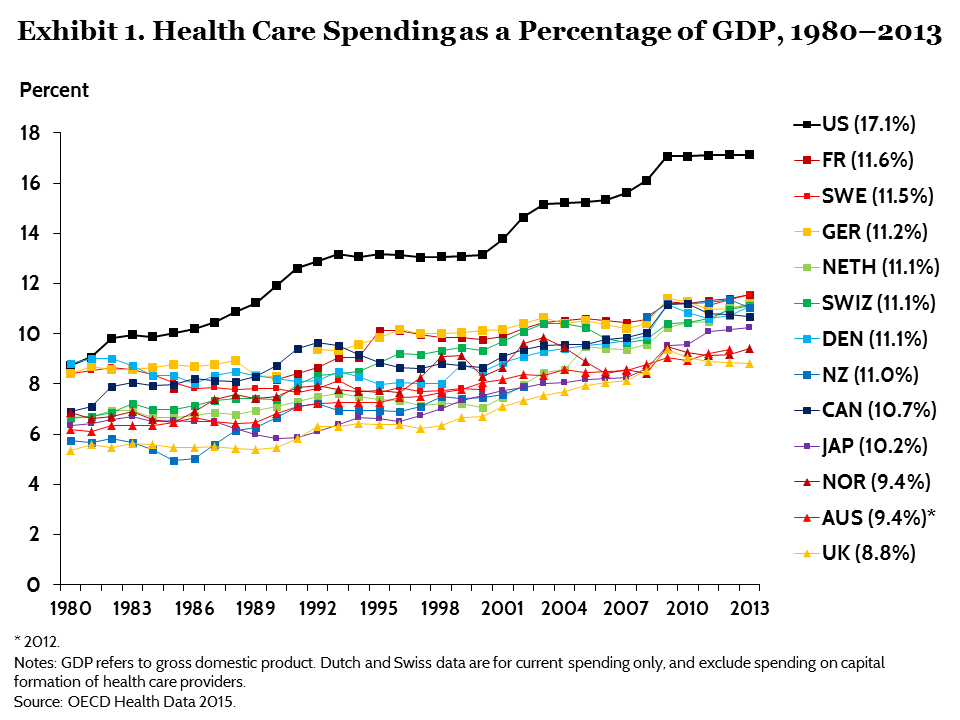
United States healthcare costs are the highest in the world, and yet the U.S. has the lowest average life expectancy compared to economic peer nations.


The ACA's requirement that insurance not exclude people with pre-existing conditions and premiums be community rated was a major change to the health insurance marketplace. Since insurance companies must retain a balance mixed of healthy and sick people for insurance to work, this was to be offset by a mandate requiring all individuals to be insured, as well as the development of a Federal Marketplace to help individuals purchase health insurance, including provisions to provide additional help to companies that initially enrolled an imbalance between high and low cost participants.  Congress, however, did not appropriate the money, to compensate for this adverse risk, which was authorized in the law resulting in these companies having to bear the loss alone. As a result, some of them either dropped out of the individual market or raised their premiums by large amounts.

As a result of the implementation of the Affordable Care Act,  almost 380,000 Virginians receive healthcare coverage through the Federal Marketplace and 84 percent, 319,000, receive federal tax credits to offset the cost of premiums. About 220,000 of those receiving tax credits also receive additional subsidies for cost sharing because they have incomes under 250% of the Federal Poverty Level (FPL), less than $50,400 for a family of three.

Virginia also has about 1.4 million people, or approximately 16 percent of its population, who receive healthcare coverage through Medicaid/FAMIS.  More than three-quarters of these Medicaid/FAMIS recipients are children with average annual cost of a little more than $2,000 annually. Aged and disabled persons represent less than a quarter of Medicaid recipients but cost an average of more than $17,000 annually.

Because Virginia did not take advantage of the ACA that allow states to pull down federal dollars for expansion, Virginia also has about 400,000 people who are uninsured and have household income of less than 138% of the Federal Poverty Level,  about $16,000 for an individual or $27,000 for a family of three. Most of these residents are employed or family members of people employed. These people remain without insurance coverage because Virginia hasn't taken the federal dollars available for expanded coverage.

Medicaid expenditures have been increasing nationally due to growth in our aging and disabled populations and continual growth in health care expenditures. It is important to note that States that expanded coverage saw their Medicaid expenses increase at a slower rate than states that didn't. This may only get worse if Virginia doesn't figure out a way to provide healthcare coverage for the significant number of uninsured, low-income people in the state. People who go without the regular primary and preventative services that coverage affords are more likely to become disabled at an earlier age and, when they do become eligible for Medicare and Medicaid (if low income) at 65, they are sicker and require more resources.

  • Congress passed a reconciliation bill this past year that was vetoed by President Obama which would have limited future Federal Medicaid funding by eliminating money available to states for expansion and giving the states an option of receiving a fixed “block grant” or “per capita” amount (based on current Medicaid enrollees and some estimate of state costs) with any increase tied to general inflation, not healthcare cost inflation.  The amount would not be adjusted to account for increased need due to an aging population, an economic downturn, continued growth of healthcare costs above inflation, or other factors beyond the control of state governments. The only real “flexibility” a Medicaid block grant would give states is the flexibility to decide how to make up Medicaid funding shortfalls (e.g. services to cut, which provider payments to cut, which taxes to raise, etc.). Because of Virginia’s relatively low Medicaid cost and enrollment currently, it will be particularly hard for our state to respond to the healthcare needs of vulnerable Virginians with a change in the federal funding mechanism.

The ACA added several new benefits to Medicare such as a new array of preventive benefits, a new annual wellness benefit, legislation to close the "donut" hole in Medicare Part D, and several new steps to slow down costs by moving to outcome based payments. These changes reduced out of pocket costs for beneficiaries and extended the solvency of the Part A trust fund by almost 12 years. Contrary to what has been stated recently, the ACA has improved the solvency of Medicare. The repeal of the ACA would leave all of these provisions up in the air.  

  • Speaker Paul Ryan is on record saying that he wants to abandon the social insurance principles of Medicare and privatize it through a plan called "premium support". This essentially gives vouchers to seniors who will then buy their health insurance in the private market. Every reputable analyst has concluded that this would drastically increase out of pocket costs for seniors possibly costing some seniors as much as half their social security income annually.

What can Virginia do to protect & expand healthcare access?

Take advantage of every Federal dollar that becomes available for improved access.

  • With the potential repeal of the Affordable Care Act and change in federal Medicaid funding, Virginia cannot afford to be one of the 19 states left behind.  We need to ensure we are able to maximize how much money we can bring back to Virginia to protect our communities and healthcare providers, to provide health care to thousands of hardworking Virginians, and to create jobs and stimulate the economy. 

Any proposed changes in funding of Medicaid and other federal healthcare programs need to be carefully evaluated to determine long-term impact on Virginians access to needed services, particularly for low-income and vulnerable populations.

  • Block grants and similar programs that limit federal responsibility for care of vulnerable populations only push the responsibility onto Virginia lawmakers and its citizens.  Moreover, the federal government’s ability to take on debt during economic downturns is not shared by Virginia and, therefore, has far reaching implications for our state’s economy.

Support the work of Virginia’s Joint Subcommittee on Mental Health to address access to and coordination of critical behavioral health services.

  • Untreated behavioral health conditions have far reaching impacts on our communities, economy and the individuals and their families with mental health/substance abuse. Virginia has made some progress with the implementation of the GAP (Governor’s Access Plan) Medicaid waiver program and its ARTS (addiction & recovery treatment services) waiver amendment to add improved treatment for Medicaid recipients (expected to begin April 2017), however, the opioid crisis and limited access to community based services statewide have created strain on our criminal justice, healthcare,  and economic development systems. The Joint Subcommittee is studying and is expected to develop recommendations to address these impacts.


  • The Virginia Interfaith Center supports the work of mental health advocates throughout the state. Some of the priorities for mental health advocates are:
    • Timely, appropriate, affordable services as early as possible;
    • Eliminate waiting lists through “same day access” throughout the state;
    • Integrate health and mental health services in the community; and
    • Support jail diversion for people accused of crimes for whom voluntary mental health or substance use treatment is a reasonable alternative to confinement.