The front page of Saturday's Daily News-Record featured a depressingly long list of area men killed in US wars over the past hundred years. There were over 250 men included in this horrific roster, one with the headline "The Ultimate Sacrifice".
No one with a heart should ever simply glance at these names or note these numbers and remain unmoved. These are real people, and their tragic stories represent an unimaginable trauma not only for them, but for the 250 or more families directly involved, for the untold numbers of sweethearts, spouses, siblings, parents, children, coworkers, neighbors and friends of the dead whose lives were forever altered by these deaths.
Today I grieve for each one of them, and pray for healing for worldwide wounds inflicted by war.
The only way any of us could ever begin to support such utterly cruel and preventable killing is through the use of euphemistic language in lauding armed conflict as a noble and selfless sacrifice. We avoid naming armed conflict for what it really is, a form of organized mayhem and inhumane brutality.
The editorial page of the same issue of the DNR features the text of an eloquent speech by General Douglas MacArthur delivered to cadets at West Point on May 12, 1962.
His remarks begin with, "Duty, Honor, Country. These three hallowed words reverently dictate what you want to be, what you can be, what you will be. They are your rallying point to build courage where courage seems to fail, to regain faith when there seems to little cause for faith, to create hope when hope becomes forlorn...The unbelievers will say they are but words, but a slogan... But...They build your basic character...They teach you to be proud and unbending in honest failure, but humble and gentle in success..."
Note the religious language in such speeches, with words like "hallowed", "reverently", "faith", "hope", "(un)believers", "character", "humble" and "gentle". Who could oppose an enterprise so laced with piety?
I do not fault the average foot soldier for embracing such embellishments in support of killing, or for becoming brainwashed into engaging in it out of love for God and country. But while many soldiers display extraordinary and laudable courage, I find it hard not to see them at the same time as being expendable pawns of the powers that control them.
What would happen to our addiction to killing, for whatever cause, if instead of describing our dead as merely haven "fallen", or having made "the ultimate sacrifice", we would honor their lives and their tragic deaths by being candid in how we describe it? In reality, killing in battle typically means having fragments of human flesh, bones, blood, brains, intestines, and other body parts splattered and scattered beyond recognition, accompanied by the desperate and God-forsaken cries of the wounded and dying. And that doesn't even begin to describe all of the horror of what really happens when we aim heavy artillery fire at other human beings, whether soldiers or civilians.
So the best way to honor those around the world who have been killed or permanently injured as a result of having been persuaded (or coerced) into defending freedom, honor, and/or their homeland, would be to announce that the barbaric business of war is over, and we are pledged to forever putting an end to it.
So listen Syria. Pay attention, Sudan, Russia, Kenya, the U.S. Listen to the cries of the suffering and the laments of the grieving. For God's sake, for Allah's sake, for Jesus' sake, let's work and pray together to find a better way to peace on earth.
Mennonite pastor and counselor Harvey Yoder blogs on faith, life, family, spirituality, relationships, values, peace and social justice.
Monday, May 26, 2014
Saturday, May 24, 2014
Could This Growing Threat Divide Our Church?
![]() |
| Greed: wanting more than is needed |
- Ezekiel 16:49 (NASB)
I refer to the question of how we respond to greed-oriented persons who seek to become members of our fellowship.
I'm aware of a growing number of Mennonites who have quietly come out as multi-millionaires, and have begun to live accordingly. They may represent fewer than 3-5% of us, but that's still a lot of people. In addition, an untold number of members, while not yet living an openly multi-millionaire lifestyle, nevertheless have a strongly greed-based and consumer-driven orientation. All of us face the danger of becoming far too attached to money and the abundance of things money can buy.
Not everyone who stewards large sums of money or manages enterprises that produce large amounts of wealth is necessarily greed-driven. I know business men and women who operate with integrity, provide decent jobs at fair wages and don’t assume that managing more capital wealth entitles them to a greater share of consumer wealth. In other words, they continue to live simply and frugally and share sacrificially with those in need.
But Jesus repeatedly warns us of the danger of greed and of pursuing wealth for selfish ends rather than solely for the good of others. And what should make this a grave concern is that if one takes scripture seriously it is clear that no greedy person can be considered a part of the rule of Christ. Note:
Do you not know that wrongdoers will not inherit the kingdom of God? Do not be deceived! Fornicators, idolaters, adulterers, male prostitutes, sodomites, thieves, the greedy, drunkards, revilers, robbers—none of these will inherit the kingdom of God.
- I Corinthians 6:9-10 (NRSV, emphasis mine)
So what do you think? Should the church begin to do some major house cleaning based on this growing concern about the love of Mammon, one to which Jesus gives more attention than to any of his other teachings?Clarifying note: The Merriam-Webster definition of greed is "a selfish and excessive desire for more of something (as money) than is needed."
An Appeal To Members Of Virginia's New Parole Board
Virginia Parole Board
6900 Atmore Drive
Richmond, VA 23225
(804) 674-3081
Current members:
- Ms. Karen Brown, chair
- Mr. Algie T. Howell, Jr., vice-chair
- The Reverend Doctor A. Lincoln James (pastor of Trinity Church in Richmond)
- Mr. Sherman R. Lea (Roanoke City Council member, former VDOC head, Western District)
- Mr. Minor F. Stone (25 years in law enforcement)
Dear Parole Board member:
Congratulations on your recent appointment to the current Parole Board.
According to the Parole Board website, "The Virginia Parole Board... continues to be empowered by Virginia Code Section 53.1-136 to make the following decisions:
- to conditionally release inmates who are parole eligible,
- to revoke parole and post release supervision of those under supervision found to be in violation of the terms of their release, and
- to investigate, prepare reports and advise the Governor, when requested, on Executive Clemencies.
I hope you will increase the numbers of prisoners who have been behind bars for many years and who could be safely released to their families and communities. A number of men with whom I have been in correspondence were incarcerated on the basis of plea agreements in which they were told that if they served some of their time and exhibited good behavior they would be eligible for parole in a reasonably short time.
Such promises were never kept for countless numbers of persons who, in spite of their best efforts, have been refused parole year after year because of "the severity of their crimes", something they are of course powerless to change. Many of these parole eligible inmates are over fifty, having passed the age where their being at risk for re-offending is dramatically reduced. Many of them would in fact qualify for geriatric release.
I offer the following names only as examples of good people I believe deserve to be given their second chance. As a taxpaying citizen, I fail to see the merits of detaining persons long after they have demonstrated that they have learned their lesson and are ready to become contributing members of society:
Mr. James E. Bender #1010837 (excellent prison record, seeks parole after spending years in prison under old law)
Greensville Correctional Center
901 Corrections Way
Jarratt, VA 23870-6914
Mr. Stephano Colosi #1037581 (excellent prison record, is an active advocate for geriatric release for aging prisoners)
Buckingham Correctional Center
P. O. Box 430
Dillwyn, VA 23936-0430
M. Steven W. Goodman #1028377 (excellent prison record, active in doing legal research on restoration of parole)
Buckingham Correctional Center
P. O. Box 430
Dillwyn, VA 23936-0430
Mr. Danny Haskin 1005852 (excellent prison record and has taken every educational opportunity available to him)
Greensville Correctional Center
901 Corrections Way
Jarratt, VA 23870
Mr. A. Jefferson Grissette #1143033 (wrongfully sentenced based on plea bargain and photo line-up, excellent prison record)
St. Brides Correctional Facility
P.O. Box 16482
Chesapeake, VA 23328
Mr. Nat Painter 1009725 (age 72, incarcerated 19 years, denied parole in spite of excellent prison record)
Coffeewood Correctional Center
12352 Coffeewood Drive
Mitchells, VA 22792
Mr. Jens Soering #1161655 (47-year-old who seeks return to his native Germany, has authored six books on prison life and prison reform since 1986, when he was incarcerated for a wrongful confession)
Buckingham Correctional Center
P.O. Box 430
Dillwyn, VA 23936-0430
Mr. Jonathan D. White #1161021 (has exceptional prison and education record and has worked hard to earn parole)
Powhatan Correctional Center
3600 Woods Way
State Farm, VA 23160
Mr. Charles E. Zellers, Sr. #1036758 (excellent prison record, active in prison reform efforts)
Buckingham Correctional Center Bl-113-B
P.O. Box 430
Dillwyn, VA 23936
Sincerely,
Harvey Yoder, LPC
11345 Hamlet Drive
Harrisonburg, VA 22802
Wednesday, May 21, 2014
If Christians Had Only Listened To Jesus, They May Have Saved The Planet
![]() |
| source |
Luke 12:33 (paraphrase)
We tend to dismiss these words as among those impractical sayings of Jesus that no reasonable person could ever put into practice in real life. But what if Jesus intended them to be wise counsel about the kinds of investments that bring about optimal returns?
When we invest in the needs of our fellow human beings rather than in ever more consumer goods, he insists, we are putting our money where it really produces lasting results and brings the greatest possible satisfaction.
Had Christians heeded this kind of advice, the planet might have averted disaster.
Unfortunately, most so-called Christians, especially those of western Europe and the new world, have become known as the most ravenous and reckless consumers of all time, promoting a way of life that is wrecking the planet, exhausting its resources and poisoning its atmosphere. And regrettably, most other developing nations have been all too eager to follow our lead.
What would have happened if those who profess to follow Jesus would have from the beginning taken him far more seriously when it came to sharing wealth with those in need rather than storing up more and more earthly treasure for our own comfort, convenience or self-indulgence? There would have been far more peace on earth, and trillions could have been saved through investing in plowshares instead of swords and through spending on human need rather than on human greed. Hunger, malnutrition, homelessness and many diseases could have been virtually eliminated if the rate of consumption had been reduced and wealth more equitably shared.
We may all realize, too late, that Jesus was not simply giving humanity some good sounding but optional financial advice in the gospels, but a mandate that could prove to be the only way we could all survive.
But alas, professed Christians, on the whole, have been no more Christ-like when it comes to their rate of consumption than unbelievers in general.
Monday, May 19, 2014
Location, Dislocation, Relocation.
![]() |
| source |
My father had just made the same trek in a freight car designed for cross country moves, one that held livestock in one end, farm machinery in the middle and our furniture at the other end. It was a huge undertaking for my 40-year-old parents to make this move to a new community with their brood of eight. They also faced the challenge of making a living on the rocky and hilly 120 acre farm my uncle financed for us, quite in contrast to the 160 acres of relatively flat land we had come from.
Why did they do it? Not for financial gain or for a better farm, but for the benefit of us children, believing that the families and young people in the little Amish congregation at Stuarts Draft would provide a better environment for us to grow up in. Many of the young people in their Kansas church youth group were into things like drinking and smoking and some engaged in courtship practices they were afraid we would be negatively influenced by.
I will always be grateful to them for making the decision to relocate. And it turned out pretty well as far as our passing on their faith and values to families of our own. I've often wondered what might have happened to us if they had chosen otherwise.
I shared that story at our house church gathering yesterday, where our lectionary texts reminded us that following Jesus is sure to involve some major relocation, certainly a decisive dislocation of our perspective and direction if not an actual geographical move.
In the Acts 7 passage for this Sunday, Stephen, a passionate member of the Jesus movement in Jerusalem, is brutally stoned by angry members of the Jewish establishment. This young firebrand, not a Judean native, outraged the Judean powers by promoting two controversial positions regarding religion and location. First, he insisted that God doesn't identify primarily with a certain land (the whole earth is the Lord's), and secondly, that God does not dwell in temples made by human hands (but inhabits the hearts and lives of faithful people everywhere).
![]() |
| source |
That didn’t go down well with the ruling party, who saw God as providing a promised land they could call their own, with secure borders that would forever exclude outsiders--along with a temple in their midst which would be God's exclusive dwelling.
But Stephen, quoting key Hebrew texts, insisted that God had no need for either a particular plot of real estate or for a dwelling made with human hands, something very hard for them to hear, especially since they had just been given the gift (by King Herod) of a glorious new temple on Mt. Zion, which they believed pointed to a restored theocracy and a land free of all foreign enemies. The idea that God’s new kingdom, led by Messiah, would welcome everyone, that it was to be an international movement that included all believers of all kinds from every tribe and nation, and not Jews only, was in their minds a rank heresy.
So the relocation Stephen calls for takes us into Abraham, Joseph, Moses and Jesus territory--all of them being resident aliens in their time--and into temples not made with human hands.
Saturday, May 17, 2014
How One EMU Professor Helped Save 300 County Homes
![]() |
| from EMU archives |
In 1963, the United State Army Corps of Engineers published plans to build 16 large dams along the Potomac River and its tributaries, including one at Brocks Gap on the North Fork of the Shenandoah River, about 15 miles north of Harrisonburg. The Army Corps’ goals were noble enough: to spare Washington D.C. from the destructive flooding that had periodically drowned the National Mall, secure the city’s water supply for decades to come, and create 16 new lakes’ worth of recreational opportunity for the American public.
Of course, there were some pesky details to all of this. The 150-foot dam proposed at Brocks Gap would have buried the community of Fulks Run beneath 122,000 acre-feet of water, displacing more than 300 families and inundating, among other things, nearly 4,000 acres of productive farmland, a brand-new elementary school and at least 17 places of businesses.
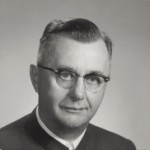
Ernest Gehman
Gehman made his feelings on the matter plain in a May 1963 letter he wrote to Harrisonburg’s Daily News-Record (using language remarkably similar to certain strains of contemporary political discourse): “It is the sort of trampling on human rights that one might expect to find in atheistic Russia, but hardly in our so-called free and so-called Christian America.”
The situation in Fulks Run felt dire, recalls Garnett Turner, the owner of a then-threatened country store famous for its sugar-cured Turner hams. Turner recalls the officer leading the Army Corps’ plans as being “right emphatic that it was going to happen” – the security of the nation’s capital was said to be at stake.
Gehman knew the best way to block the Army Corps’ plan was to suggest an alternative; his counter-proposal involved the construction of smaller dams along the entire length of the Shenandoah River. Built every five to 10 miles within the channel of the river (and thus known as “channel dams”), these were to have kept the water no higher than flood stage, essentially turning the Shenandoah into a series of long, narrow lakes.
The idea was inspired by channel dams that Gehman had seen in the late ’40s in Germany while completing his doctorate at the University of Heidelberg, and a decade later during a year he spent teaching in Austria under the Fulbright exchange program. The Neckar River, which flows past Heidelberg, was a particular inspiration.
Gehman argued that the channel dams would serve the Army Corps’ water supply and flood control goals without destroying the community behind Brocks Gap. He also played up the economic development angle, as the addition of locks at each dam could open the Shenandoah River to commercial navigation.
Like most conservative Mennonites of his era, Gehman frowned on participation in politics and never voted in his life, according to his son John Gehman. That didn’t stop him, though, from diving into the bureaucratic and political fray surrounding the Army Corps’ scheme.
“He was bold,” recalls John, who was in medical school in Richmond while his father took on the Army Corps of Engineers. “He didn’t hesitate to speak up about his thoughts and feelings.”
In September 1963, Gehman went to Washington to present a rationale for his channel dam proposal at a public hearing held by the Army’s Board of Engineers for Rivers and Harbors. (Also there that day was Garnett Turner and nearly 200 others who’d come from Fulks Run in five chartered Greyhound buses to make their displeasure known.)
He began writing to the newspapers, local officials, state legislators and Virginia’s Congressional delegation. Responses, ranging from tepid to fairly enthusiastic, came back from Virginia’s two senators at the time – Harry F. Byrd Sr. and Willis Robertson – as well as Governor Albertis Harrison and West Virginia Governor William Barron. Gehman’s greatest ally in Washington, though, soon became Rep. John O. Marsh of Virginia’s 7th District.
In one of the many letters the two exchanged over a several-year period, Marsh wrote: “The time you have given to this problem is a most valuable contribution to the public interest.”
John Gehman, now a general practice physician who lives in Crewe, Va., remembers that his father “just kept drumming away at it,” despite a growing sense of frustration when the channel dam plan seemed to be going nowhere.
Gehman also struck up correspondence with the German Embassy in Washington, and in the spring of 1964, organized a meeting between high-ranking American officials and a German engineer named Gerhard Krause who was an expert on Germany’s channel dams.
With the help of Krause and other contacts in Germany, Gehman then compiled an 18-page brochure that examined the German channel dams in considerable detail and fleshed out his plans for similar dams on the Shenandoah River. In May 1965, the Broadway-Timberville Chamber of Commerce funded the printing of 2,000 copies, which Gehman and his allies began distributing widely. Later that summer, Marsh wrote to request more copies, as the brochure was “attracting considerable interest” in Washington DC. In June, it reached the hands of Lady Bird Johnson – the First Lady of the United States, who wrote in a letter to the Broadway-Timberville Chamber of Commerce:
Professor Gehman’s study of channel dams in the Potomac tributaries interests me very much, and I am sending it to Secretary [of the Interior Stewart] Udall so that he and his professional staff can give it full and immediate consideration in their plans.
In August, another 1,000 copies of the brochure came off the press, and by year’s end, Gehman had spoken about his idea to around two dozen civic groups in the Valley.
(The plan wasn’t without its drawbacks. A state game official wrote that construction of the channel dams would destroy the Shenandoah’s smallmouth bass fishery, considered one of the finest in the country. The Izaak Walton League, a private wildlife and habitat conservation organization, formally opposed the Gehman plan for the same reason.)
By mid-decade, though, significant resistance was mounting to the Army Corps’ original plan for Brocks Gap, which seems to have been quietly pigeonholed. The historical record (and the Army Corps’ own archives) is remarkably silent on the specifics of how, exactly, this transpired, and the details escape the memory even of people like Garnett Turner who fought to save his own home and business. The Army Corps plan was there, until suddenly it wasn’t.
Regardless, once plans for the Brocks Gap dam dissolved, Gehman also shelved his channel dam plan that had consumed an enormous amount of his time and energy of over a several-year period.
In 1973, Gehman officially retired from EMU, after teaching for 47 years. Over the next decade or so, he continued to teach a few German classes until his health began to fail him, and in the summer of 1988, he died at the age of 86.
The Turner Store is still in the family and still sells its fine Virginia hams. The Fulks Run Elementary School recently celebrated its 50th anniversary. Fertile farmland still covers the valley west of Brocks Gap and surrounds the still-intact Hebron Mennonite Church. And Runions Creek still runs past Bethel Mennonite Church before reaching the North Fork of the Shenandoah, which then flows unencumbered through Brocks Gap and down the Valley towards Washington D.C., as it did since before Ernest Gehman and the Army Corps of Engineers devised competing plans for its future.
— Andrew Jenner ’04
Thursday, May 15, 2014
Grandfather Daniel J. Yoder, A Man Of Sorrows
In one of my last extended conversations with my dad, he talked at length about the intense life of grief his father Dan experienced, having lost three wives and two young children by the time he was 45.
Grandfather Dan, who died before I was born, grew up as the oldest of 11 children in the John and Anna Yoder family in northern Indiana. In his late teens he fell in love with sixteen-year-old Fannie Troyer, and after a rather brief period of dating, proposed to her. Young Fannie, instead of instantly agreeing as he had hoped, asked for some time to think this over before giving him an answer.
Theirs was something of a star crossed relationship in the first place in that Dan was Amish and Fannie a "church house Amish" a less conservative group that later became a part of the Indiana-Michigan Mennonite Conference. In those days, before such inventions as cars, phones and TV's, the differences between the groups were not so obvious, but Dan's parents nevertheless frowned on the relationship.
Girls marrying in their mid teens was not uncommon in those days, but Fannie's less than enthusiastic response may have been one of Dan's first major setbacks, and rather than risk her rejection--and perhaps to please his parents--Dan never went back to Fannie to get her answer, something he felt badly about later.
Fannie, by the way, later moved to Kansas to do housekeeping for an Amish widower, Abraham Nisly, and ended up marrying one of his sons, Eli, who later became an Amish bishop. By a strange twist of fate, Eli and Fannie became my mother Mary's parents. So Fannie, instead of potentially becoming my paternal grandmother, became my maternal grandmother.
Meanwhile, Dan courted and married an Amish girl, Lucy Lehman, and the two moved to a newly forming Amish settlement in Mississippi.
Here is where Dan's troubles really begin.
At age 23, Lucy died of measles, leaving him a heartbroken widower with two very young children, John and Anna, dutifully named after his parents. On the day of Lucy's burial, little Anna also died of measles.
Soon thereafter, Dan married Rebecca Schrock, and the two had five more children together. Then his beloved Rebecca died of tuberculosis, leaving him a widower with six young ones to care for. Then only months after Rebecca's death, his youngest daughter Mary likewise died of tuberculosis.
Dan then married Elizabeth Miller, and the two moved to Yoder, Kansas, and had three more children together, the youngest of whom was my father, Ben. Then when my father was only three years old, Elizabeth went into labor with what would have been their fourth child, and died of complications in childbirth.
"The next five years were like a blur to me," my father told me. "I would often cry myself to sleep wishing I had a mother like other children did. And my father, a 'man of sorrows', wasn't able to comfort us because he was going through so much grief himself."
When my dad was eight, Dan married again, this time to Miriam Mullet, a widow. Miriam's first marriage had been to a widower who already had nine children when his wife passed away, and the two of them then had four more.
Some of Dan and Miriam's older children had already grown and left home, but their large blended family failed to blend well, and Dan experienced additional grief trying to deal with all of the conflict and stress involved in trying to keep their tribe together and functioning. One of his teen age sons (who slept with the older boys in their farm's tenant house), ran away one night and got married in another state, adding to Dan's feelings of loss and depression that went all the way back to the loss of his first love, Fannie.
Much later in life Dan apologized, not to Fannie, but to her husband Eli, for the way he had treated her years before. Perhaps he felt God was somehow punishing him, in that his first three wives died young and Fannie enjoyed good health and lived to a ripe old age.
Needless to say, my father had anything but a happy childhood. But by some miracle, he became one of the kindest and compassionate persons I have ever known. I'm blessed as I reflect on how my forebears' faith in God and love of family eventually brought them through their most difficult and dark times.
Grandfather Dan, who died before I was born, grew up as the oldest of 11 children in the John and Anna Yoder family in northern Indiana. In his late teens he fell in love with sixteen-year-old Fannie Troyer, and after a rather brief period of dating, proposed to her. Young Fannie, instead of instantly agreeing as he had hoped, asked for some time to think this over before giving him an answer.
Theirs was something of a star crossed relationship in the first place in that Dan was Amish and Fannie a "church house Amish" a less conservative group that later became a part of the Indiana-Michigan Mennonite Conference. In those days, before such inventions as cars, phones and TV's, the differences between the groups were not so obvious, but Dan's parents nevertheless frowned on the relationship.
Girls marrying in their mid teens was not uncommon in those days, but Fannie's less than enthusiastic response may have been one of Dan's first major setbacks, and rather than risk her rejection--and perhaps to please his parents--Dan never went back to Fannie to get her answer, something he felt badly about later.
Fannie, by the way, later moved to Kansas to do housekeeping for an Amish widower, Abraham Nisly, and ended up marrying one of his sons, Eli, who later became an Amish bishop. By a strange twist of fate, Eli and Fannie became my mother Mary's parents. So Fannie, instead of potentially becoming my paternal grandmother, became my maternal grandmother.
Meanwhile, Dan courted and married an Amish girl, Lucy Lehman, and the two moved to a newly forming Amish settlement in Mississippi.
Here is where Dan's troubles really begin.
At age 23, Lucy died of measles, leaving him a heartbroken widower with two very young children, John and Anna, dutifully named after his parents. On the day of Lucy's burial, little Anna also died of measles.
Soon thereafter, Dan married Rebecca Schrock, and the two had five more children together. Then his beloved Rebecca died of tuberculosis, leaving him a widower with six young ones to care for. Then only months after Rebecca's death, his youngest daughter Mary likewise died of tuberculosis.
Dan then married Elizabeth Miller, and the two moved to Yoder, Kansas, and had three more children together, the youngest of whom was my father, Ben. Then when my father was only three years old, Elizabeth went into labor with what would have been their fourth child, and died of complications in childbirth.
"The next five years were like a blur to me," my father told me. "I would often cry myself to sleep wishing I had a mother like other children did. And my father, a 'man of sorrows', wasn't able to comfort us because he was going through so much grief himself."
When my dad was eight, Dan married again, this time to Miriam Mullet, a widow. Miriam's first marriage had been to a widower who already had nine children when his wife passed away, and the two of them then had four more.
Some of Dan and Miriam's older children had already grown and left home, but their large blended family failed to blend well, and Dan experienced additional grief trying to deal with all of the conflict and stress involved in trying to keep their tribe together and functioning. One of his teen age sons (who slept with the older boys in their farm's tenant house), ran away one night and got married in another state, adding to Dan's feelings of loss and depression that went all the way back to the loss of his first love, Fannie.
Much later in life Dan apologized, not to Fannie, but to her husband Eli, for the way he had treated her years before. Perhaps he felt God was somehow punishing him, in that his first three wives died young and Fannie enjoyed good health and lived to a ripe old age.
Needless to say, my father had anything but a happy childhood. But by some miracle, he became one of the kindest and compassionate persons I have ever known. I'm blessed as I reflect on how my forebears' faith in God and love of family eventually brought them through their most difficult and dark times.
Subscribe to:
Posts (Atom)


